
English
Views: 0 Author: Site Editor Publish Time: 2026-04-02 Origin: Site


In modern manufacturing, the pressure to increase throughput while managing rising labor costs is immense. Production lines are constantly seeking ways to eliminate bottlenecks, and manual end-of-line packaging is often a primary culprit. This is where automation becomes a strategic imperative, not just a luxury. An automatic carton packing machine seamlessly integrates into the final stages of production, erecting cartons, inserting products, and sealing them with precision and speed. Making the right investment, however, requires a decision framework that looks beyond the initial capital expenditure. This guide will help you evaluate these machines based on critical technical specifications, industry-specific needs, and the all-important long-term return on investment (ROI).
Price vs. Value: Initial costs range significantly based on BPM (Bottles/Bags Per Minute) and automation level; TCO (Total Cost of Ownership) is the more critical metric.
Versatility is King: Modern machines must handle diverse SKUs, from biscuit cartoning to disposable products, with minimal changeover time.
Technical Benchmarks: Look for PLC-controlled systems and servo-driven movements to ensure precision and reduce mechanical wear.
Compliance Matters: Ensure equipment meets CE, ISO, or GMP standards depending on your specific sector (e.g., pharmaceutical or food).
Choosing the right cartoning machine starts with understanding the fundamental types and how they align with your product and facility. The two primary categories are horizontal and vertical cartoners, each offering distinct advantages for specific applications. Making an informed choice at this stage prevents costly integration issues and operational inefficiencies down the line.
The orientation of the machine—how it receives the product and loads it into the carton—is the most significant differentiator. Your product's physical characteristics will largely dictate which type is suitable.
Horizontal Cartoners: These machines are ideal for products that are stable and can be pushed into a carton from the side. Think of blister packs, soap bars, sachets, or trays of cookies. The product is typically placed on an infeed conveyor and gently pushed into the erected carton by a mechanical pusher. They are highly versatile and common in many industries.
Vertical Cartoners: These are designed for products that are best handled with a top-load or gravity-fed method. Items like bottles, jars, granular products in pouches, or irregularly shaped items that cannot be easily pushed are perfect for this system. The machine erects the carton from below, and the product is dropped or placed into the open top before the flaps are closed.
A standard cartoner rarely fits all needs perfectly. Experienced manufacturers offer specialized configurations tailored to the unique challenges of different industries. These modifications ensure product integrity, meet regulatory standards, and maximize efficiency.
Food & Bakery: This sector requires gentle handling to prevent damage. For applications like Biscuit Cartoning, machines use specialized feeders and loaders that carefully collate and slide stacks of biscuits without cracking them. Similarly, Bread cartoning systems must accommodate soft, pliable products, often integrating with bagging machines.
Personal Care & Medical: Precision and hygiene are paramount. High-speed systems for Steam eye mask cartoning or Warmer pad cartoning must handle delicate, lightweight items with extreme accuracy. These machines often feature stainless steel construction for easy cleaning and meet strict validation standards like GMP.
Daily Necessities: For high-volume items, robustness and speed are key. The equipment for Disposable products cartoning, such as face masks, gloves, or wet wipes, is built for continuous, 24/7 operation and rapid changeovers between different product counts and pack sizes.
An automatic packing machine is rarely a standalone unit. Its true value is realized when it communicates flawlessly with the rest of your production line. It must interface with upstream primary packaging equipment, such as flow wrappers, vertical form-fill-seal (VFFS) machines, or bottle fillers. Downstream, it needs to connect with case packers and palletizers to create a fully automated end-of-line solution. Look for machines with flexible communication protocols (like OPC-UA) that allow for seamless data exchange and line synchronization.
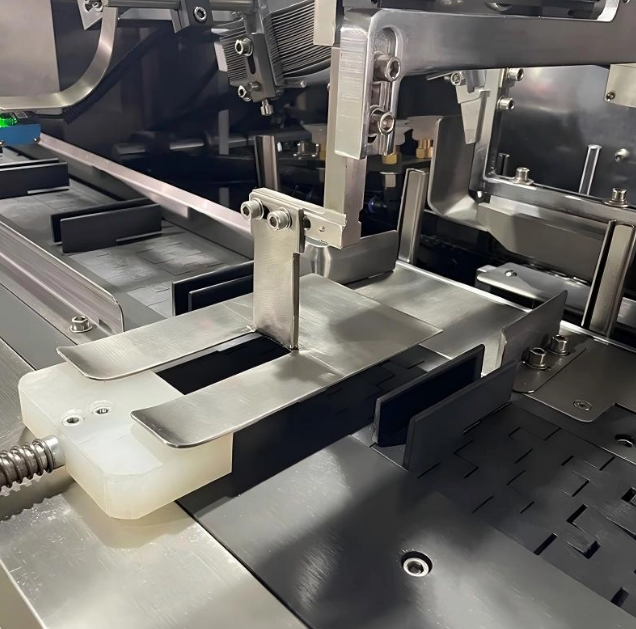
Beyond the basic function of packing boxes, a high-performance machine is defined by its precision, reliability, and ease of use. The underlying technology and build quality separate a workhorse from a machine that causes constant headaches. Focusing on these critical features ensures you invest in equipment that delivers consistent output and minimizes downtime.
The "brain" of a modern automatic box packing machine is its control system. This typically consists of two key components:
Programmable Logic Controller (PLC): This is the industrial computer that executes the machine's functions with microsecond precision. Reputable PLCs from brands like Siemens, Allen-Bradley, or Schneider Electric are the industry standard, offering reliability and global support.
Human Machine Interface (HMI): This is the touchscreen or panel where operators interact with the machine. A well-designed HMI is intuitive, providing clear diagnostics, fault alarms, and simple controls for functions like recipe management and changeovers. This dramatically reduces the potential for operator error.
In older machines, mechanical linkages, cams, and chains powered movements. Modern, high-performance cartoners rely on servo motors. Servo-driven systems are superior for several reasons. They offer precise, programmable control over speed, position, and torque. This allows for smoother acceleration and deceleration, reducing mechanical stress and wear. It also enables faster, more accurate synchronization between different machine modules, like the carton erector and the product loader, which is critical for high-speed operation.
How the product gets into the machine is just as important as how it gets into the box. A one-size-fits-all in-feed system is a recipe for jams and product damage. A high-quality machine will offer modular feeding options that can be customized for your specific products. This might include:
Bucket Conveyors: For loose or granular items.
Pick-and-Place Robots: For delicate or complex-shaped products.
Auger Fillers: For powders.
Star Wheels: For bottles and vials.
The ability to swap these modules provides future-proofing, allowing you to adapt the machine for new product lines.
A smart machine minimizes waste. Modern cartoners are equipped with a network of sensors for real-time monitoring. A "no product, no carton" logic ensures that a carton is only pulled from the magazine if a product is present at the loading station. Likewise, a "no carton, no load" function prevents the product loader from activating if a carton is not correctly erected. These simple checks save significant costs in wasted packaging materials and prevent messy jams.
The machine's frame and contact parts should be built to last. The choice of material is crucial, especially in food, pharmaceutical, or cosmetic environments where hygiene is non-negotiable.
| Feature | 304 Stainless Steel | 316 Stainless Steel |
|---|---|---|
| Corrosion Resistance | Good general resistance. Suitable for most dry product applications. | Excellent resistance, especially against chlorides and acids. Essential for saline products or harsh wash-down environments. |
| Common Use Case | General food packaging, industrial goods, consumer products. | Pharmaceuticals, medical devices, marine applications, acidic food products. |
| Cost | Lower cost. | Higher cost due to added molybdenum content. |
The price of an automatic carton packing machine can vary dramatically, from tens of thousands to several hundred thousand dollars. Understanding what drives this cost is key to specifying a machine that fits your budget and operational needs. The sticker price is influenced by automation level, speed, customization, and the chosen closure method.
The degree of automation has the most direct impact on both price and labor requirements.
Semi-Automatic Systems: In these machines, an operator typically erects the carton and/or manually loads the product. The machine then takes over to close and seal the flaps. These are lower in cost and offer a good entry point into automation but still require significant manual labor.
Fully Automatic Systems: These machines handle the entire process: they pick a flat carton from a magazine, erect it, load the product via an automated infeed system, and seal it. While the initial investment is much higher, they can run with minimal supervision, drastically reducing headcount and enabling higher throughput.
Speed, often measured in cartons or products per minute (BPM), is a major cost driver. A machine designed to run at 30 BPM has a fundamentally different mechanical and electronic design than one built for 120 BPM. Higher speeds require more robust components, advanced servo-motion control systems for precise timing, and more sophisticated product handling to maintain stability. As speed requirements increase, the engineering complexity and material costs rise exponentially, not linearly.
Manufacturers often offer standard, "off-the-shelf" models designed for common carton sizes and product types. These are the most cost-effective options. However, many applications require customization, such as unique carton designs, special product feeders, or integration with existing, non-standard equipment. This bespoke engineering adds significant cost due to design time, fabrication of custom parts, and extended testing. While necessary for some, it's always wise to see if your product can be adapted to a standard machine before opting for a fully custom build.
The way a carton is sealed also affects the machine's price and ongoing operational costs. Each method has its own trade-offs in terms of security, aesthetics, and consumable expenses.
| Closure Method | Initial Machine Cost | Ongoing Consumable Cost | Best For |
|---|---|---|---|
| Tuck-in Closures | Lowest | None | Lightweight products, premium aesthetics, easy opening. |
| Hot-Melt Glue | Medium | Moderate (glue pellets) | Tamper evidence, high-speed applications, secure sealing. |
| Adhesive Tape | Low to Medium | High (tape rolls) | Large shipping cartons, less common for primary product cartons. |
A savvy buyer looks beyond the initial purchase price and evaluates the Total Cost of Ownership (TCO). This holistic approach considers all costs associated with the machine over its entire lifespan, from labor and materials to energy and maintenance. Calculating TCO provides a clear picture of the machine's true financial impact and helps justify the investment through a tangible Return on Investment (ROI).
The most immediate and quantifiable return comes from reducing labor costs. To calculate this, follow these steps:
Determine the number of manual packers the machine will replace.
Calculate the total annual cost of one packer (including wages, taxes, benefits, etc.).
Multiply this cost by the number of replaced workers to find your annual labor savings.
Divide the machine's purchase price by the annual labor savings to estimate the payback period.
For many companies, a fully automatic box packing machine can have a payback period of less than two years, making it a powerful investment.
Automation brings a level of precision that manual packing cannot match. This leads to direct savings in material costs. An automatic machine erects and folds cartons perfectly every time, reducing the number of damaged or mis-formed boxes that must be discarded. Furthermore, features like "no product, no carton" logic eliminate the waste of empty cartons being sealed and sent down the line. This consistent quality also eliminates costly "re-work" required to fix poorly packed products, improving overall operational efficiency.
Energy is a growing operational expense. When evaluating machines, compare their power requirements. Older machines often rely heavily on compressed air (pneumatics) for movement, which is notoriously inefficient. A single leak in an air line can waste thousands of dollars per year. Modern machines increasingly use all-electric, servo-driven systems. These systems consume significantly less energy as they only draw power when a movement is required, leading to lower utility bills over the machine's lifetime.
Downtime is the enemy of productivity. A machine's long-term reliability is heavily influenced by its maintenance requirements and the availability of spare parts. When selecting a packing machine manufacturer, inquire about their use of components. A manufacturer that uses non-proprietary, globally available parts from trusted brands like Schneider, Siemens, Omron, or Festo is a much safer bet. This ensures that if a sensor or motor fails, you can source a replacement quickly and affordably, rather than being locked into a single supplier with long lead times and inflated prices.
The machine itself is only part of the equation. Your long-term success with automation depends heavily on the partner you choose. A reputable manufacturer provides more than just hardware; they offer expertise, support, and a commitment to your operational goals. Performing thorough due diligence is a critical step that protects your investment.
When a machine goes down, every minute counts. Evaluate the manufacturer's support infrastructure. Do they offer 24/7 technical support? Can they provide remote diagnostics by logging into the machine's PLC to troubleshoot issues quickly? Furthermore, a comprehensive training program is essential. The manufacturer should provide on-site training for your operators and maintenance staff, ensuring they are confident in running, cleaning, and performing basic preventative maintenance on the equipment.
Never take performance for granted. Insist on formal acceptance testing protocols to verify the machine meets your specifications.
Factory Acceptance Testing (FAT): This is conducted at the manufacturer's facility before the machine ships. You (or your representative) should be present to see the machine run with your actual products and carton materials. It's the best time to identify and correct any issues.
Site Acceptance Testing (SAT): This is performed at your facility after installation. It confirms that the machine performs to the agreed-upon standards in your production environment and is properly integrated with your line.
Having clear, signed-off FAT and SAT documents ensures there are no surprises after delivery.
Get a clear and realistic timeline for the entire project, from design approval and manufacturing to delivery and commissioning. Reputable manufacturers will provide a detailed project plan. Also, discuss the future. Ask about the machine's scalability. How easily can it be upgraded for higher speeds? How adaptable is it to new SKU sizes or carton designs? A machine with a modular design offers better protection for your investment as your business grows and market demands change.
The best indicator of a manufacturer's quality and reliability is their track record. Ask for a list of references, preferably from companies in your specific industry. Contact these references and ask about their experience. Inquire about the machine's reliability, the quality of the technical support, the ease of changeovers, and whether the manufacturer delivered on their promises. Verifying a manufacturer's expertise in your niche—whether it's handling delicate pharmaceuticals or rugged industrial parts—provides invaluable peace of mind.
Purchasing an automatic cartoning machine is the first step. Successful implementation requires careful planning and an understanding of the practical challenges involved. Addressing these realities proactively will help you avoid common pitfalls and ensure a smooth transition to an automated workflow.
Many manufacturers advertise "tool-less" or "quick" changeovers. The reality is that the time and complexity can vary greatly. A truly flexible machine will use digital readouts, hand-crank adjustments with position indicators, and quick-release handles. Ask for a live demonstration of a changeover between your most dissimilar carton sizes. Documenting the actual time it takes will give you a realistic expectation for daily uptime, especially in a high-mix production environment where you might change SKUs multiple times a day.
High-speed automation has specific utility needs that must be met. Before the machine arrives, conduct a facility audit.
Footprint: Ensure you have adequate physical space not just for the machine itself, but also for operator access, maintenance, and staging areas for cartons and products.
Compressed Air: If the machine uses pneumatics, verify that your compressed air system can supply the required volume (CFM) and pressure (PSI). More importantly, the air must be clean and dry to prevent damage to pneumatic components.
Electrical Stability: High-performance machines with multiple servo motors require stable, clean power. Fluctuations or "dirty" power can cause faults in the control system. A dedicated circuit may be necessary.
Automation shifts the required skill set of your staff. You are moving from a team focused on manual dexterity to one responsible for machine supervision, troubleshooting, and quality control. This requires a new mindset and training. Involve your key operators and maintenance personnel early in the selection process. This fosters a sense of ownership and allows them to become comfortable with the new technology. Plan for a transitional period where productivity might temporarily dip as the team adapts to the new workflow.
One of the most overlooked yet critical success factors is the quality of your packaging materials. An automatic cartoner is designed to work with cartons that have consistent dimensions, stiffness, and scoring. Underestimating the importance of carton quality is a frequent cause of machine jams and downtime. Work with your carton supplier to establish clear specifications for paperboard weight (GSM), grain direction, and dimensional tolerances. A cheap carton that constantly jams the machine is a false economy that will cost you far more in lost production than you save on materials.
Investing in an automatic carton packing machine is a strategic move that can deliver significant competitive advantages. By shifting the focus from the initial price to a comprehensive evaluation of features, performance, and long-term value, you can ensure a successful outcome. The right machine, aligned with your specific production needs, will reduce labor costs, minimize material waste, and increase throughput for years to come.
Ultimately, the most successful automation projects are partnerships. Prioritize reliability, robust engineering, and responsive support from a trusted manufacturer over simply choosing the lowest initial bid. This approach guarantees a higher return on investment and a more sustainable, efficient packaging operation.
Ready to explore how automation can transform your end-of-line packaging? Contact our specialists today to request a custom configuration analysis or a detailed ROI audit for your facility.
A: With proper preventative maintenance and the use of quality spare parts, a well-built automatic carton packing machine has an average operational lifespan of 10 to 15 years. Machines in less demanding, single-shift environments can often last even longer. The key to longevity is adhering to the manufacturer's recommended maintenance schedule for lubrication, inspection, and replacement of wear parts.
A: Yes, most modern cartoners are designed for flexibility. They use adjustable guides, movable mandrels, and other mechanisms to accommodate a range of carton lengths, widths, and depths. Changeovers are typically achieved through a combination of hand-crank adjustments and swapping out pre-set change parts for major size differences. The specific range of sizes a single machine can handle should be a key point of discussion with your manufacturer.
A: Tuck-in closures have no consumable costs, but the cartons are often slightly more complex and expensive to produce. Hot-melt glue systems require an ongoing investment in glue pellets, but they provide a stronger, more tamper-evident seal. Over the long term, the cost difference often balances out, making the choice dependent on security needs and product aesthetics rather than pure cost.
A: Lead times can vary based on machine complexity and the manufacturer's current backlog. For a standard or slightly modified machine, a typical lead time is between 8 and 12 weeks from the final design approval. For a highly customized or integrated system, the lead time can extend to 16 weeks or more to account for custom engineering, fabrication, and testing.
A: Yes, these machines can run recycled cardboard, but consistency is critical. Recycled board can sometimes have more variation in stiffness, thickness, and moisture content. It's essential to work with your carton supplier to ensure the material meets the specifications required by the machine manufacturer. A test run with your specific recycled board during the Factory Acceptance Test (FAT) is highly recommended.


