
English
Views: 0 Author: Site Editor Publish Time: 2026-04-09 Origin: Site


The transition from manual labor to automated packaging systems represents a pivotal moment for any growing business. When evaluating this shift, many decision-makers fixate on the initial "sticker price" of the equipment. This approach, however, often overlooks the more critical metric: Total Cost of Ownership (TCO). A lower upfront cost can easily be negated by frequent breakdowns, inefficient material usage, and excessive labor needs. This guide is designed to help you navigate the complex technical and financial variables of investing in an automatic packing machine. We will break down the true cost drivers, from component quality to operational efficiency. Be warned of the "Hidden Cost" trap; low-entry price points can lead to high operational downtime, turning a perceived bargain into a long-term liability.
Accuracy equals Profit: Reducing "product giveaway" through precision weighing can pay for the machine within 12–18 months.
TCO over Initial Capex: Factor in labor savings, material waste reduction, and maintenance (Servo vs. Pneumatic).
Application-Specific Selection: Different products (e.g., biscuit cartoning vs. steam eye mask cartoning) require distinct feeding and sealing technologies.
Scalability: Invest in a machine capable of 20-25% more than current peak capacity to avoid premature bottlenecks.
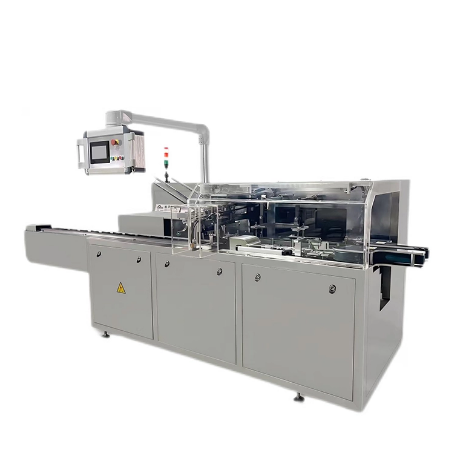
Selecting the right packing machine starts with understanding where it fits into your production line. Packaging operations are typically divided into primary and secondary stages, each requiring specialized equipment to ensure product integrity and efficient handling.
Primary packaging is the first layer of material in direct contact with your product. Its main purpose is to contain, protect, and preserve the item. Common machines for this stage include Vertical Form Fill Seal (VFFS) and Horizontal Form Fill Seal (HFFS) systems, which create bags or pouches around products like chips, powders, or single-use items.
Secondary packaging groups these primary packages together for easier handling and distribution. This is where an automatic box packing mahine, commonly known as a cartoner, comes into play. It takes sachets, bottles, or flow-wrapped items and places them into cartons or boxes, preparing them for shipping.
Cartoners are the workhorses of secondary packaging. They automate the process of erecting, loading, and sealing paperboard cartons. The choice between different cartoner types depends heavily on your product, speed requirements, and factory layout.
Horizontal vs. Vertical Cartoning Logic: Horizontal cartoners are ideal for products that are stable and can be pushed into a carton, like blister packs or soap bars. Vertical cartoners, on the other hand, load products from the top, which is perfect for items like bottles, jars, or loose-fill products that are best handled by gravity.
Continuous vs. Intermittent Motion: Intermittent motion machines operate on a start-stop cycle, making them suitable for lower-speed applications or products requiring careful handling. Continuous motion machines never stop, smoothly loading products at very high speeds. They represent a larger investment but deliver maximum throughput for high-volume production.
Different industries have unique packaging challenges. The right machine is not a one-size-fits-all solution; it must be tailored to the specific product's characteristics.
Food & Bakery: High-speed biscuit cartoning and bread cartoning demand machines built with stringent hygiene standards. Features like stainless steel construction, easy-to-clean surfaces, and effective crumb management systems are non-negotiable to prevent contamination and ensure food safety.
Medical & Personal Care: Precision and gentle handling are paramount for delicate items. Operations like steam eye mask cartoning and warmer pad cartoning require sophisticated feeding systems that can manage flimsy or unusually shaped products without causing damage.
High-Volume Essentials: For industries producing massive quantities of everyday items, robust systems for disposable products cartoning are essential. These machines are engineered for durability, high speed, and minimal downtime to keep up with relentless consumer demand.
The price tag on a packing machine is a composite of its engineering, materials, and capabilities. Understanding these core drivers allows you to assess whether a higher initial cost will deliver a better long-term return. A cheap machine with unreliable components can cost you far more in downtime and waste than a well-engineered one.
The degree of automation is one of the most significant factors influencing price. The spectrum ranges from simple, manually-fed machines to fully integrated, lights-out production lines.
Semi-Automatic Machines: These require an operator to perform key tasks like loading products or placing cartons. They offer a lower entry price and are suitable for small-scale operations or lines with frequent product changes.
Fully Automatic Machines: These systems handle everything from feeding products and erecting cartons to sealing and discharging finished boxes. A fully integrated packing machine line minimizes labor costs and human error, justifying its higher capital expenditure for high-volume producers.
The materials used in a machine's construction directly impact its longevity, reliability, and suitability for specific environments. For instance, the difference between standard and food-grade stainless steel is significant.
A machine built with SS316 stainless steel, which offers superior corrosion resistance, typically carries a 20–30% price premium over one made with the more common SS304. This extra investment is essential for pharmaceutical, food, and beverage applications where sanitation and resistance to harsh cleaning agents are critical.
The "brains" and "muscles" of a packing machine are its control system and drive components. These elements dictate the machine's precision, efficiency, and maintenance needs.
The choice between servo-driven and pneumatic systems is a classic example of balancing initial cost against long-term performance. Pneumatic systems use compressed air and are mechanically simpler and cheaper upfront. However, they are less precise and less energy-efficient. Servo motors offer digital precision, higher speeds, and greater reliability, reducing wear and tear and lowering energy consumption over the machine's life.
| Feature | Pneumatic Systems | Servo-Driven Systems |
|---|---|---|
| Initial Cost | Lower | Higher |
| Precision & Control | Good | Excellent, digitally repeatable |
| Energy Efficiency | Lower (compressed air is costly) | Higher (power on demand) |
| Maintenance | Higher (seals, valves wear out) | Lower (fewer mechanical wear parts) |
| Best For | Simple, lower-speed tasks | High-speed, high-precision applications |
Additionally, the integration of brand-name PLC (Programmable Logic Controller) systems from reputable manufacturers like Rockwell or Siemens adds to the cost. However, it ensures long-term parts availability, global support, and easier integration with other factory systems, providing crucial operational security.
The required output, measured in boxes per minute (BPM) or products per minute (PPM), is a major price driver. As speed requirements increase, the engineering complexity grows exponentially. A machine designed to run at 120 BPM requires far more robust mechanics, advanced motion control, and precise timing than a machine running at 30 BPM. This complexity is directly reflected in the final price.
A smart investment in packaging automation is not about finding the cheapest machine; it's about finding the one that delivers the highest return. By analyzing factors beyond the initial purchase price, you can build a solid business case based on Total Cost of Ownership (TCO) and Return on Investment (ROI).
One of the most direct financial benefits of automation is labor savings. Consider a manual packaging line that requires three operators per shift. You can calculate the annual labor cost by multiplying their hourly wage, benefits, and hours worked. Now, compare that figure to the amortized cost of a single box packing mahine. In many cases, the machine pays for itself in less than two years through labor reduction alone, while also providing more consistent output.
Automated systems are inherently more precise than manual processes, leading to significant savings in packaging materials and product.
Calculating "Price Per Package": A well-calibrated machine minimizes carton or film waste during startup, changeover, and normal operation. Even a small percentage reduction in material waste translates to substantial savings over millions of cycles.
The "Giveaway" Factor: Product overfill, or "giveaway," is a hidden profit killer. If your manual process consistently overfills each package by just one or two grams, the cumulative loss over a year can be staggering. An automated system with a precision weighing and filling module can reduce this giveaway to near zero, with the savings often being enough to justify the machine's cost.
What is the true cost of an "unplanned stop"? It's not just a silent machine. It's the cost of idle labor, missed production targets, and potential late shipment penalties. For example, if a machine failure leaves 10 workers idle at an average loaded cost of $25 per hour, you are losing $250 every hour the line is down. This calculation makes a powerful argument for investing in high-reliability machines with robust components and responsive technical support, even if they have a higher initial price.
A comprehensive TCO analysis must project maintenance costs over the machine's lifespan. A cheaper machine might use proprietary or low-quality wear parts that are difficult to source and require frequent replacement. A premium machine, while more expensive upfront, often uses standardized, high-quality components that last longer and are readily available. When requesting a quote, ask for a 5-year estimate for common wear parts and technical support contracts to get a more accurate picture of the long-term financial commitment.
Once the financial framework is established, the focus shifts to the technical specifications. A thorough evaluation ensures the machine you select is not only productive but also safe, flexible, and future-proof for your facility.
Modern machine safety goes far beyond basic physical guards. Look for machines with integrated safety PLCs that meet current industry standards like ISO 13849-1. These systems use light curtains, interlocking doors, and emergency stop circuits that are actively monitored. A supplier who can provide a comprehensive risk assessment document demonstrates a commitment to operator safety, which is crucial for compliance and reducing liability.
For facilities that produce multiple products or package sizes (SKUs), changeover time is a critical performance metric. Every minute spent adjusting guides and replacing parts is a minute of lost production. Evaluate machines for features that facilitate quick changeovers:
Tool-less Adjustments: Hand-cranks, locking levers, and quick-release mechanisms that don't require tools.
Digital Readouts and Scales: Numbered scales and digital position indicators allow for precise, repeatable setups.
Recipe Management: Advanced systems allow operators to save settings for each SKU in the HMI, enabling one-touch changeovers for all automated axes.
A machine that can be changed over in 15 minutes instead of 60 minutes can unlock thousands of dollars in additional production capacity each month.
The "smart factory" is here, and your next machine should be ready for it. Industry 4.0 capabilities provide valuable data and control for optimizing your entire operation.
Remote Diagnostics: The ability for a technician to securely log into your machine remotely can resolve issues in minutes instead of days, drastically reducing downtime.
OEE (Overall Equipment Effectiveness) Tracking: Onboard software that tracks availability, performance, and quality gives you real-time insight into your line's efficiency.
ERP/MES Integration: Ensure the machine's control system can communicate with your existing Enterprise Resource Planning or Manufacturing Execution Systems to automate work orders and production reporting.
Finally, the machine must physically fit into your plant. Don't just consider the machine's length and width; also account for operator access, maintenance clearance, and electrical/pneumatic drop locations. Modular designs often offer more flexibility in space-constrained environments compared to large, monolithic builds. Always request detailed layout drawings to confirm the fit before signing a purchase order.
Choosing the right machine is only half the battle; choosing the right partner to supply and support it is equally important. Your relationship with the vendor will extend for the 10-15 year lifespan of the equipment, so a thorough vetting process is essential.
You can often source equipment directly from the Original Equipment Manufacturer (OEM) or through a regional distributor. Each has its advantages.
Manufacturers (OEMs): Buying direct gives you access to the deepest engineering expertise. This is the best route for complex, custom applications. You are communicating directly with the people who designed and built the machine.
Distributors: A good local distributor provides responsive, on-the-ground service and support. They often represent multiple brands and can offer a more integrated solution for a full packaging line. Their local presence can be invaluable for emergency service calls.
Before committing to a supplier, run through a checklist to verify their capabilities and reliability.
Factory Acceptance Testing (FAT): Insist on a comprehensive FAT at the manufacturer's facility. This is your opportunity to see your machine run with your specific products and materials before it ships. It's much easier to fix issues there than on your production floor.
Fatigue Testing Protocols: Ask about their R&D process. Do they stress-test critical components to identify weak points? A manufacturer who invests in fatigue testing is building a more reliable machine.
Global Parts Supply Chain Resilience: Inquire about their parts inventory and logistics. How quickly can they get critical spare parts to you? A resilient supply chain is crucial for minimizing downtime.
Finally, determine if a standard machine will meet your needs or if you require custom engineering. Standard, off-the-shelf models are less expensive and have shorter lead times. However, if you have a unique product shape, a specific packaging requirement like for unique disposable products cartoning, or a challenging integration, paying for bespoke engineering is a wise investment. A custom-designed solution from an experienced automatic carton packing mahine builder will perform more reliably and efficiently than a standard machine that has been modified to fit an application it was not originally designed for.
Investing in a new packing machine is a strategic decision that impacts your bottom line for years to come. The central theme of this guide is the importance of adopting a "value over price" philosophy. The machine with the lowest initial cost is rarely the one that provides the best long-term return. True value lies in reliability, efficiency, and the support of a trusted partner.
Our final recommendation is to prioritize mechanical stability and vendor support above all else. A robust, well-engineered machine from a reputable supplier will consistently outperform a cheaper alternative, saving you money through reduced downtime, less waste, and higher throughput. Your next steps should be to conduct a detailed site audit to understand your physical and operational constraints and then to develop a precise User Requirement Specification (URS) document. This will arm you with the data needed to make a truly informed and profitable investment.
A: With a proper preventive maintenance program and the use of quality OEM parts, a high-quality automatic packing machine should have an operational lifespan of 10 to 15 years, or even longer. The mechanical frame and core components are built to last; regular updates to control systems and software may be needed over time to keep it modern.
A: Servo technology reduces long-term costs in two key ways. First, it is significantly more energy-efficient, as motors only draw power when moving, unlike pneumatic systems which require a constantly running air compressor. Second, servos have fewer mechanical wear parts (like seals and valves), leading to lower maintenance costs and less downtime over the machine's life.
A: It is possible, but depends on the product dimensions and packaging style. Handling both often requires a machine with a wide adjustment range and dedicated changeover parts for each product. For example, the infeed and product handling mechanisms for fragile biscuits would be different from those for a loaf of bread. A flexible machine designed for multiple SKUs can manage this, but changeover time is a key consideration.
A: Lead times can vary significantly. A standard, off-the-shelf machine might be available in 8-12 weeks. However, a custom-engineered automatic box packing machine that requires unique design, fabrication, and testing will typically have a lead time of 16-24 weeks or more, depending on its complexity and the manufacturer's current production schedule.
A: To calculate your giveaway loss, use this simple formula: (Average Overfill per Package in grams) x (Total Packages Produced per Month) = Total Grams Wasted. Convert the total grams to kilograms or tons and multiply by your product's cost per unit of weight. This reveals the total monthly or annual profit lost to overfilling.


