
English
Views: 0 Author: Site Editor Publish Time: 2026-03-12 Origin: Site


The global packaging landscape in 2026 is defined by a shift from simple automation to intelligent integration. As labor costs rise and sustainability mandates tighten, selecting an automatic carton packing machine manufacturer is no longer just about speed—it’s about Total Cost of Ownership (TCO), Overall Equipment Effectiveness (OEE), and future-proof flexibility. This guide evaluates the leading global players based on their technical innovation, regional service infrastructure, and industry-specific application expertise. Choosing the right partner means investing in a system that can adapt to new materials, integrate with your existing line, and deliver measurable returns through reduced downtime and operational efficiency. This analysis will equip you with the knowledge to make a strategic decision that supports your production goals for years to come.
Market Growth: The cartoning machinery market is projected to reach $13.58 billion by 2034, driven by a 5.05% CAGR.
Efficiency Drivers: Servo-driven systems are replacing traditional cam-driven units, offering up to 50% energy savings and faster changeovers.
Selection Logic: Prioritize manufacturers offering "Turnkey Integration" to minimize the risks of upstream/downstream compatibility.
Regional Strengths: European manufacturers lead in precision and high-speed pharma; Chinese manufacturers dominate in price-to-performance and custom flexibility for FMCG.
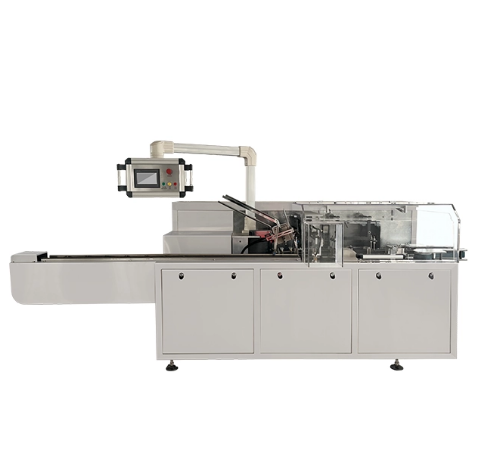
Selecting a cartoning machine in 2026 involves navigating a complex matrix of economic, environmental, and technological pressures. The decision you make today will directly impact your operational agility, cost structure, and ability to compete in a rapidly evolving market. Three core trends are shaping this landscape.
The persistent rise in global labor rates is a primary driver behind the transition from semi-automatic to fully automated packaging lines. Manual or semi-automatic cartoning is no longer economically viable for medium- to high-volume production. It introduces variability, limits throughput, and carries significant overhead. A fully automatic carton packing machine removes these bottlenecks, providing consistent speed, precision, and 24/7 operational capacity. This shift allows businesses to reallocate human capital to higher-value tasks while securing a predictable and scalable packaging process.
Consumer demand and government regulations are pushing for more sustainable packaging. By 2026, the ability of a box packing mahine to handle challenging materials is a critical requirement. This includes monomaterial cartons designed for easy recycling and packaging made from recycled corrugated board. These materials often have inconsistent thickness, lower rigidity, and a higher tendency to warp. An advanced cartoning machine must feature robust carton erection systems, sensitive material handling mechanisms, and adjustable settings to prevent jams and maintain high efficiency, ensuring your sustainability goals don't compromise your production targets.
Modern cartoning machines are intelligent, connected assets. The integration of Industry 4.0 principles means that equipment is equipped with a network of AI-driven sensors. These sensors continuously monitor key performance indicators like vibration, temperature, and motor torque. By analyzing this data, the system can predict potential component failures and calculate the Mean Time Between Failures (MTBF). This capability transforms maintenance from a reactive, emergency-based activity into a proactive, scheduled process. It drastically reduces unplanned downtime, which is often the single largest contributor to lost revenue in a production environment.
The global market for cartoning machinery is diverse, with key players offering distinct strengths. European manufacturers are often lauded for precision engineering in pharmaceuticals, while Chinese innovators excel in providing flexible, cost-effective solutions for fast-moving consumer goods (FMCG). Here is a breakdown of the top manufacturers shaping the industry in 2026.
| Manufacturer | Headquarters | Primary Specialization | Key Feature |
|---|---|---|---|
| Syntegon Technology | Germany | Pharmaceutical & Food | High-speed, Industry 4.0 integration |
| IMA Group | Italy | Cosmetics, Tea & Pharma | "Batch Size of One" flexibility |
| ProMach | USA | Turnkey Lines (All Industries) | Extensive North American support |
| Jochamp | China | Food, Medical & FMCG | High-speed versatility (up to 500 cpm) |
| Marchesini Group | Italy | Pharmaceutical Blister/Vial | Integrated serialization systems |
| Youngsun Packaging | China | Large-scale FMCG & Pharma | Vacuum-suction carton opening |
| Viking Masek | USA/Czech | Food & Beverage (Harsh Environments) | Rugged, stainless steel builds |
| Soontrue | China | Bakery & Confectionery | Multi-axis servo control systems |
| Gerhard Schubert | Germany | Luxury Goods & Complex Assortments | Pioneering top-loading robotics |
| Sici Auto | China | Niche Personal Care & Hygiene | Custom feeders for unique products |
Born from Bosch Packaging Technology, Syntegon is a powerhouse in high-speed applications for the pharmaceutical and food industries. Their machines are known for exceptional reliability and full integration with upstream and downstream equipment. They are at the forefront of "Industrial 4.0," offering connected solutions that provide real-time OEE data and predictive maintenance alerts.
IMA is a leader in high-precision cartoning, particularly for the cosmetics and tea industries where package appearance is paramount. Their strength lies in handling delicate products and complex carton designs. They are pioneers of "Batch Size of One" manufacturing, offering highly flexible machines that can change over quickly to accommodate a wide variety of SKUs.
ProMach is a major force in the North American market, operating a portfolio of over 40 specialized packaging brands. Their key advantage is providing fully integrated, turnkey packaging lines from a single source. For manufacturers seeking a complete end-to-end solution with robust, local 24/7 support, ProMach is often the top choice.
Jochamp has earned a strong reputation for building versatile and high-speed cartoning machines that serve the food, medical, and FMCG sectors. They offer an impressive speed range, with models running from 50 to 500 cartons per minute. Their equipment provides an excellent balance of performance, flexibility, and cost-effectiveness.
Specializing in the pharmaceutical sector, Marchesini Group provides highly sophisticated cartoning solutions for complex products like blisters, vials, and syringes. Their machines seamlessly integrate serialization and track-and-trace systems, ensuring full compliance with global pharmaceutical regulations.
As a publicly listed company with over 900 patents, Youngsun is a major player in Asia and beyond. They are particularly well-regarded for their large-scale packaging lines featuring advanced vacuum-suction carton opening systems. This technology ensures reliable carton erection even at very high speeds, making them a go-to for high-volume producers.
Viking Masek is renowned for its rugged, durable machinery built to withstand demanding production environments. Their cartoning machines, often constructed from stainless steel, are ideal for the food processing industry, where frequent washdowns and harsh conditions are the norm. They prioritize reliability and longevity in their designs.
Soontrue is an expert in precision motion control, utilizing advanced multi-axis servo systems (often with up to 7 motors) in their cartoners. This high level of control makes them a preferred choice for delicate or irregularly shaped products. Their expertise is particularly evident in applications like Biscuit Cartoning and Bread cartoning, where gentle handling is essential to prevent product damage.
Schubert is the pioneer of top-loading robotic packaging technology (TLM). Instead of traditional side-loading, their modular robotic systems pick and place products into cartons from above. This approach is ideal for fragile luxury goods, complex product assortments, or items that cannot be pushed, offering unmatched flexibility and gentle product handling.
Sici Auto carves out a niche by specializing in customized automation for the personal care and hygiene sectors. They design and build machines with highly specific feeding systems for challenging products. This includes solutions for Steam eye mask cartoning, Warmer pad cartoning, and other Disposable products cartoning, where standard machines often fail to perform reliably.
A manufacturer's spec sheet provides a starting point, but a truly strategic decision requires a deeper analysis. You must evaluate how a machine will perform within the context of your specific operation, considering speed, space, integration, and daily usability.
The first question is whether you need a continuous motion or intermittent cartoning machine. Use this simple formula to guide your decision:
Required Speed (Cartons per Minute) = (Daily Volume × Safety Factor) / (Operating Hours × 60)
Continuous Motion: Designed for high-volume, low-variety production (typically 30-80 cpm). The product and carton move continuously without stopping, maximizing throughput.
Intermittent Motion: Ideal for lower speeds or high-variety production (typically 30-80 cpm). The product and carton stop momentarily for each step (e.g., insertion, closing), which allows for greater flexibility and handling of complex products.
Your calculated required speed will quickly tell you which technology is the right fit. The "Safety Factor" (usually 1.2-1.3) accounts for minor stops and planned maintenance.
Manufacturing floor space is expensive real estate. A bulky machine can disrupt workflow and limit future expansion. When evaluating options, look for:
Compact Design: Does the machine have a minimal footprint?
Modular Construction: Can it be configured to fit your specific line layout?
Ergonomics: Is the carton magazine easy to access and refill without requiring excessive space?
A well-designed machine maximizes output per square foot, a critical metric for any modern facility.
A cartoning machine is never a standalone island; it's a link in a chain. Its ability to seamlessly integrate with upstream equipment is vital for overall line efficiency. Consider how the cartoner will receive products from devices like flow wrappers, multi-head weighers, robotic pick-and-place systems, or liquid fillers. Proper integration relies on perfect electronic handshaking and physical synchronization to prevent product backlogs or starvation, which can bring the entire line to a halt.
For operations with multiple SKUs, changeover time is a major factor in OEE. Manufacturers often advertise "quick changeovers," but the reality can differ. Differentiate between:
True Tool-less Changeover: Achieved in under 30 minutes using hand-cranks, digital readouts, and quick-release locking mechanisms. No tools are required.
Assisted Changeover: May require basic tools and take 30 minutes.
Traditional Mechanical Changeover: Involves significant mechanical adjustments, multiple tools, and can take an hour or more.
The time saved during changeovers translates directly into more production time and higher profitability.
A standard automatic carton packing machine rarely fits all needs perfectly. Top-tier manufacturers offer industry-specific solutions designed to handle the unique challenges of different products. When you choose a machine, you are also choosing the expertise of the carton packing machine manufacturer.
This sector demands a delicate balance of speed and gentle handling. For Biscuit Cartoning, the primary challenge is preventing breakage. This requires smooth, servo-driven pushers and precise collation systems that stack or arrange biscuits without impact. For Bread cartoning, the focus is often on high-volume throughput and managing flexible bags. The machine must be able to handle breathable or perforated cartons while ensuring a secure closure.
Products in this category are often flimsy, irregularly shaped, or have varying thicknesses. Specialized, custom-designed feeders are non-negotiable. For Steam eye mask cartoning, the machine must gently handle soft pouches. For Warmer pad cartoning, the feeder needs to accommodate slight variations in product thickness without jamming. The success of these applications depends almost entirely on the quality of the infeed system.
Compliance and quality control are paramount in this industry. The process of Disposable products cartoning for items like surgical gloves, masks, or test kits is heavily regulated. Machines must be equipped with:
Vision Inspection Systems: To verify lot codes, expiration dates, and barcodes.
Automatic Reject Stations: To immediately remove any non-compliant or empty cartons from the production line.
Secure Closures: To ensure product sterility and tamper-evidence.
Documentation and validation support from the manufacturer are also critical requirements.
Focusing solely on the initial purchase price is a common mistake that can lead to significant long-term costs. A smarter approach is to evaluate the Total Cost of Ownership (TCO), which provides a complete picture of the investment over its lifetime.
A machine with a 20% lower purchase price can easily result in a 40% higher TCO over five years. This is due to hidden operational expenses (OpEx) that accumulate over time. A cheaper machine may suffer from lower efficiency, require more frequent and expensive spare parts, consume more energy, and experience more downtime. A high-quality machine, while requiring a larger initial capital expenditure (CapEx), pays for itself through superior reliability and lower operating costs.
| Cost Factor | Standard Machine | High-End Machine | Notes |
|---|---|---|---|
| Initial Purchase Price | $120,000 | $180,000 | Initial capital outlay. |
| Annual Energy Cost | $10,000 | $5,000 | Servo-driven systems are ~50% more efficient. |
| Annual Spare Parts | $8,000 | $3,000 | Higher quality components last longer. |
| Annual Downtime Cost | $25,000 | $5,000 | Based on lost production from unplanned stops. |
| Total 5-Year TCO | $335,000 | $245,000 | The high-end machine offers a 27% lower TCO. |
The shift from mechanical cam-driven systems to electronic servo-driven technology has a significant impact on energy consumption. Servo motors only draw power when they are actively moving, whereas older mechanical systems consume power continuously. This can reduce a machine's energy usage by up to 50%. This not only lowers utility bills but also helps companies meet their carbon footprint reduction targets, a key part of modern corporate social responsibility.
Opting for a single-source turnkey manufacturer over multiple vendors can significantly de-risk your project. When you source machines from different suppliers, you risk:
Compatibility Issues: Electronic and mechanical systems may not communicate properly.
Accountability Gaps: When a problem occurs, vendors may blame each other, delaying resolution.
Longer Commissioning Times: Getting different systems to work together takes more time and resources.
A single provider is responsible for the entire line's performance, simplifying project management and ensuring a smoother startup.
Once you have a shortlist of potential manufacturers, a structured implementation and verification process is essential to mitigate risk and ensure the machine you buy is the machine you need.
The FAT is arguably the most critical step before a machine ships. You must insist on testing the equipment at the manufacturer's facility using your exact carton materials, especially if you are using recycled or lightweight board. This is your opportunity to verify that the machine meets the agreed-upon speed, efficiency, and changeover time specifications. Identifying and fixing issues at the factory is far easier and cheaper than doing so after installation.
Evaluate the manufacturer's service infrastructure in your region. Key questions to ask include:
Do they have factory-trained technicians ("boots on the ground") in your country or time zone?
What is their guaranteed response time for service calls?
Do they stock critical spare parts locally for quick shipment?
Do they offer modern remote support tools like digital twin simulations or augmented reality for faster troubleshooting?
Strong local support is a critical insurance policy against prolonged downtime.
Ensure the machine carries the necessary certifications for your market. The most common are:
CE Marking: Mandatory for machinery sold within the European Economic Area, indicating conformity with health, safety, and environmental protection standards.
UL Certification: Required in North America, certifying that the electrical components and panels meet safety standards.
ISO 9001: An international standard for quality management systems, demonstrating the manufacturer's commitment to consistent quality.
Verifying these certifications upfront prevents costly compliance issues and ensures the safety of your operators.
Selecting an automatic carton packing machine manufacturer in 2026 is a strategic decision that extends far beyond a simple equipment purchase. It requires a holistic evaluation of a manufacturer's ability to deliver a solution that is not only fast but also flexible, efficient, and reliable. The focus must shift from initial price to long-term value, measured by OEE, TCO, and the capacity to handle the sustainable packaging materials of the future. Whether you prioritize the high-precision engineering of European leaders or the agile, cost-effective customization offered by top Chinese manufacturers, the right partner will provide a machine that becomes a cornerstone of your production line's success.
A: Speeds vary widely based on the machine type and application. Intermittent motion machines, ideal for flexibility, typically run between 30 and 120 cartons per minute (cpm). High-speed continuous motion machines, designed for dedicated lines, can range from 120 to over 400 cpm. The right speed depends entirely on your specific production volume and product variety.
A: The choice depends on how your product is best loaded. Horizontal cartoners are more common and use a pusher to load products from the side; they are ideal for solid items like blister packs, soap bars, or trays. Vertical cartoners load products from the top, using gravity. They are best for loose products, powders, or liquids in bottles that need to be placed upright in the carton.
A: These products require specialized handling due to their flexible and sometimes inconsistent nature. Key requirements include a custom infeed and collation system to properly stage the products, gentle loading mechanisms to prevent damage, and sensors to detect empty or improperly filled cartons. The manufacturer must have experience in designing feeders for such non-rigid items.
A: Smart Serialization, or track-and-trace, is mandatory in the pharmaceutical industry and growing in others. It involves printing a unique code on each carton and verifying it with a vision system. When choosing a manufacturer, you need one with proven experience in integrating the necessary printers, cameras, and software into the cartoner to manage and store this data, ensuring full compliance and supply chain visibility.


