
English
Views: 0 Author: Site Editor Publish Time: 2026-03-19 Origin: Site


In manufacturing, the balance between rising labor overhead and high upfront capital expenditure (CAPEX) is a constant challenge. For many operations, the secondary packaging line represents a critical bottleneck where this dilemma is most acute. The industry is rapidly moving from labor-intensive manual packing to technology-driven automated solutions. This shift isn't just about speed; it's a strategic decision impacting efficiency, quality, and long-term profitability. Our objective is to provide a transparent analysis of the Total Cost of Ownership (TCO) for both manual and automated carton packing. By understanding the full financial picture, you can accurately determine the break-even point and make the most informed investment for your facility's future.
The "Iceberg" Cost Model: Manual packing costs extend far beyond wages, including "hidden" expenses like turnover, rework, and material waste.
Efficiency Thresholds: Automation typically becomes a financial necessity once production exceeds 500,000 units annually.
Payback Period: Most high-efficiency automatic packing machines achieve full ROI within 12 to 24 months.
Strategic Flexibility: Semi-automatic solutions offer a "middle path" for SMEs with high product variability.
When evaluating the cost of manual packing, looking only at hourly wages is like seeing just the tip of an iceberg. The true expense lies beneath the surface, in a series of interconnected costs that erode profitability over time. A comprehensive TCO analysis reveals these hidden liabilities and provides a more accurate baseline for comparison against automation.
The most common mistake in cost analysis is equating labor cost with salary. The "fully burdened" cost of an employee is significantly higher. This figure includes not only the base wage but also essential overheads that can increase the total cost by 40-60%. These additional expenses typically include:
Payroll taxes (Social Security, Medicare)
Health insurance and benefits packages
Workers' compensation insurance
Retirement plan contributions
Paid time off and sick leave
For a packing line with multiple shifts, these fully burdened costs quickly accumulate, often making direct labor the single largest expense category in the entire packaging process.
Human error is an unavoidable part of any manual process. In carton packing, these errors manifest as what industry experts call the "rework tax"—a hidden cost paid in wasted time, materials, and labor. Common errors include incorrect product counts, improper item orientation, poorly sealed cartons, and misapplied labels. Even a modest error rate of 2-5% can have a significant financial impact. Rework disrupts the production flow, requires pulling employees from other tasks to fix mistakes, and can lead to damaged products or packaging, ultimately increasing material waste.
Manual packing roles often experience high employee turnover, with industry churn rates hovering between 25% and 40% annually. The financial impact of this turnover is substantial. Each time an employee leaves, the company incurs costs related to recruitment, interviewing, hiring, and onboarding. More importantly, there is a significant productivity loss during the training period for a new hire. Experts estimate that the total cost to replace a single manual laborer can range from $8,000 to $15,000, factoring in both direct expenses and lost output.
The repetitive motions involved in manual carton packing—folding, filling, sealing, and lifting—put workers at a high risk for Repetitive Strain Injuries (RSIs). These injuries are not only detrimental to employee well-being but also create significant financial liabilities for the company. A single workers' compensation claim can lead to direct costs for medical care and lost wages, as well as indirect costs like increased insurance premiums, production delays, and potential legal fees. An automatic packing machine mitigates these risks by automating the most strenuous and repetitive tasks.
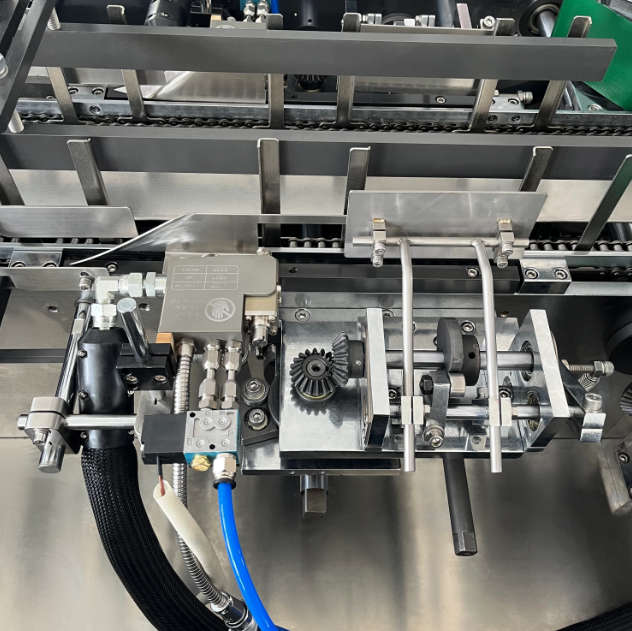
Beyond the direct cost savings, an automatic carton packing machine introduces a level of precision, speed, and consistency that manual labor simply cannot match. These technical advantages translate into higher quality products, reduced waste, and a more streamlined, predictable production environment.
An automatic box packing machine performs the same task perfectly every time. This eliminates the natural variability that comes with human operators, who may experience fatigue or distraction over a long shift. The results are immediately visible in the final product. Every carton is erected squarely, filled with the correct count and orientation of products, and sealed securely. This consistency enhances the structural integrity of the carton, protecting the product during transit and improving the unboxing experience for the end consumer.
Modern cartoning machines come with advanced features designed to optimize performance and reduce operational costs. For example, an efficient glue-spraying cartoning machine uses precise, PLC-controlled nozzles to apply the exact amount of adhesive needed. This technology minimizes glue consumption, preventing the waste and messy application common in manual processes. The result is a stronger, more reliable seal that uses less material, contributing to both cost savings and sustainability goals.
A key concept in lean manufacturing is "Takt Time," which is the rate at which you must complete a product to meet customer demand. Manual packing lines often create a "stop-and-go" effect, where the packaging station becomes a bottleneck that cannot keep pace with upstream production. Automated systems, controlled by PLCs (Programmable Logic Controllers), synchronize perfectly with the rest of the production line. They match the output speed of fillers, wrappers, or assemblers, creating a smooth, continuous flow that maximizes overall equipment effectiveness (OEE) and eliminates costly downtime.
Automation excels in specialized applications where speed and precision are paramount. Different industries require unique handling capabilities, and modern machines are engineered to meet these specific needs.
Disposable products cartoning: For industries producing items like masks, gloves, or wipes, speed is everything. Automated systems can handle thousands of lightweight, high-volume products per hour, ensuring they are counted, stacked, and cartoned without damage or delay.
Warmer pad cartoning: Products like heat packs or warmer pads often have specific dimensions and material properties. An automated system for warmer pad cartoning is designed with custom tooling to manage these items precisely, ensuring a snug fit and professional presentation every time.
Making the switch to automation is a significant capital investment. Therefore, a robust financial model is essential to justify the expenditure and project its long-term value. Key metrics like Return on Investment (ROI), Total Cost of Ownership (TCO), and the payback period provide the data-driven insights needed for a confident decision.
The simplest way to begin the analysis is with the ROI formula. It provides a clear percentage return on your investment based on the savings it generates. The formula is:
ROI = (Net Annual Savings / Total Equipment Cost) x 100
Net Annual Savings are calculated by subtracting the new annual operating costs of the machine (maintenance, energy) from the annual savings in labor, rework, and material waste. Total Equipment Cost includes the purchase price, installation, and initial training.
A powerful way to visualize the financial impact is by comparing the cost-per-unit for manual versus automated packing. While figures vary by industry, a common scenario shows a dramatic reduction. Manual packing costs, including all burdened labor and error rates, can often be around $0.24 per unit. A fully automated system can drive that cost down to approximately $0.10 per unit. When multiplied by hundreds of thousands or millions of units per year, the savings become substantial.
| Cost Factor | Manual Packing (Per Unit) | Automatic Packing (Per Unit) |
|---|---|---|
| Burdened Labor Cost | $0.18 | $0.02 (Operator/Maintenance) |
| Rework & Waste Cost | $0.04 | $0.005 |
| Material Cost (Adhesive, etc.) | $0.02 | $0.015 |
| Energy & Maintenance | $0.00 | $0.06 |
| Total Estimated Cost-Per-Unit | $0.24 | $0.10 |
Governments often encourage investment in new technology through tax incentives. In the United States, Section 179 of the IRS tax code allows businesses to deduct the full purchase price of qualifying equipment from their gross income in the year it is placed into service. This can significantly reduce the net cost of the investment. Similar capital investment allowances and depreciation benefits exist in many other countries, making the financial case for automation even more compelling.
Manual packing lines are susceptible to what is known as the "hidden factory"—unplanned downtime due to employee absence, breaks, or inconsistent pacing. Automation replaces this unpredictability with reliability. Modern machines equipped with Industry 4.0 sensors can monitor their own performance, tracking variables like vibration, temperature, and pressure. This data enables predictive maintenance, allowing teams to service the machine before a failure occurs. This proactive approach minimizes unplanned downtime, which is far more efficient than the reactive "firefighting" common in manual operations.
The decision to automate is not a one-size-fits-all solution. It depends on several key operational factors, including production volume, product complexity, and future growth plans. Using a structured decision framework can help clarify whether now is the right time to invest.
Production volume is often the primary driver for automation. At low volumes, the high CAPEX of an automatic machine may not be justifiable. However, as production scales, there is an "acceleration point" where manual labor becomes unsustainable and automation becomes a financial necessity.
| Production Volume (Annual Units) | Typical Packing Method | Justification |
|---|---|---|
| Low (< 250,000) | Manual | Low CAPEX is prioritized. Labor costs are manageable. |
| Medium (250,000 - 1,000,000) | Semi-Automatic / Entry-Level Automatic | Labor costs are rising. The need for consistency and speed is growing. |
| High (> 1,000,000) | Fully Automatic | Manual labor is a major bottleneck. ROI is typically achieved in 12-24 months. |
While automation is ideal for standardized products, high complexity can sometimes favor a manual approach. If your products have highly irregular shapes, require delicate handling, or need aesthetic judgment for presentation (like in luxury gift sets), a human touch may still be superior. In these cases, a semi-automatic system, where a machine assists an operator, can provide a good balance between human dexterity and mechanical efficiency.
Does your business experience seasonal peaks or rapid growth? Relying on manual labor for scalability often means hiring and training temporary workers, which is inefficient and costly. An automated system provides inherent scalability. It can run 24/7 during peak seasons without a drop in performance or the need for additional hiring. This allows you to meet fluctuating demand reliably and prepares your operation for future growth.
Environmental responsibility is an increasingly important factor for both consumers and regulators. Automation contributes positively to sustainability goals. By precisely controlling material usage, such as applying the exact amount of glue or forming cartons with minimal waste, machines reduce the overall consumption of raw materials. Furthermore, consistent and secure packaging reduces the rate of product damage in transit, which in turn lowers the carbon footprint associated with returns and replacements.
Choosing the right machine is only half the battle; selecting the right partner is equally critical for a successful implementation. A thoughtful strategy that looks beyond the initial price tag will ensure a smooth transition and long-term success.
When you look for a box packing machine manufacturer, the sticker price is just one data point. A true partnership requires evaluating a vendor on several key criteria:
After-Sales Support: How responsive is their technical support team? Do they offer remote diagnostics and on-site service?
Spare Parts Availability: Are critical spare parts stocked locally? What is the lead time for delivery? A machine is only as reliable as its supply chain.
Software and Integration: Can the machine's software easily integrate with your existing production line controls and data management systems?
Training and Documentation: Does the vendor provide comprehensive training for your operators and maintenance staff? Is the documentation clear and accessible?
For small to medium-sized enterprises (SMEs) or operations with a high mix of products, a fully automatic system might be too rigid or expensive. In this scenario, a semi-automatic system offers an excellent "middle path." These systems automate one part of the process, such as carton erection or sealing, while an operator handles the product loading. This approach provides a significant boost in productivity and consistency while requiring a lower initial CAPEX and retaining the flexibility of manual intervention.
Any new equipment deployment comes with a learning curve. Proactive planning can mitigate the risks associated with the first 90 days. This includes scheduling comprehensive operator training before the machine goes live, planning a phased rollout rather than a sudden switch, and working with the vendor to establish a clear protocol for troubleshooting common issues. Expect a temporary dip in efficiency as your team adapts, and build this into your production schedule to avoid disruptions.
Your investment should serve you not just today, but for the next decade. When selecting an automatic box packing machine, inquire about its capacity for future upgrades. Is the control system modular and scalable? Is the hardware compatible with future Internet of Things (IoT) sensors for enhanced data collection? Choosing a machine with a clear upgrade path ensures that your equipment will remain a valuable asset as technology continues to evolve.
The transition from manual packing to an automated system is a strategic pivot toward long-term efficiency and profitability. While the initial investment can seem daunting, a thorough analysis of Total Cost of Ownership reveals that the hidden costs of manual labor—from rework and turnover to safety liabilities—often make automation the more cost-effective choice in the long run. By improving consistency, synchronizing with production speeds, and reducing material waste, an automated solution delivers a return on investment that extends far beyond labor savings.
Your first step should not be to browse machine catalogs, but to conduct a detailed TCO audit of your current manual operations. Quantify your hidden costs to establish a clear financial baseline. From there, you can confidently evaluate which level of automation is right for you. We recommend consulting with an automation specialist who can help you run a site-specific ROI simulation to map out the most profitable path forward for your business.
A: With proper preventive maintenance and timely replacement of wear parts, a high-quality automatic carton packing machine typically has an operational lifespan of 10 to 15 years. The longevity is highly dependent on the operating environment, runtime hours, and adherence to the manufacturer's recommended service schedule. Many machines continue to operate effectively for even longer periods.
A: Modern cartoning machines often have a surprisingly compact footprint. A single horizontal or vertical cartoner can frequently replace several manual packing stations, freeing up valuable floor space. While the machine itself may be larger than one station, its output can equal that of three to five manual packers, resulting in a net gain in production density.
A: Yes, most modern automatic packing machines are designed to handle a range of carton sizes. Changeovers are typically accomplished using modular tooling and adjustable guides. Advanced models feature tool-less, recipe-driven changeovers that can be completed in minutes via an HMI, minimizing downtime between production runs of different products or package formats.
A: While specific consumption varies by model, the energy costs for an automatic packing machine are a minor operational expense when compared to labor savings. Modern machines are designed with energy-efficient motors and systems. The cost of electricity to run the machine typically represents a small fraction of the salary and burdened costs of the manual labor it replaces.
A: Automation significantly enhances product safety and compliance. It ensures every package is sealed correctly, providing tamper-evidence and protecting product integrity. Automated systems can also integrate with vision systems and serialization equipment to create a robust track-and-trace record, which is crucial for regulatory compliance in industries like pharmaceuticals and food and beverage.


